
Understanding Different Soil Types
The common soils used in agriculture include sandy, loamy, clay and compact soils. Sandy soils are normally soft and easy to cultivate, but they can be cultivated using machines with controlled tillage that do not disturb the soil too much. Loamy soils are balanced and can be cultivated using various tillage machines. Clay soils can be muddy when wet and hard when dry and hence need machines with adequate power and proper rotary parts.
Machine Selection Based on Soil Conditions
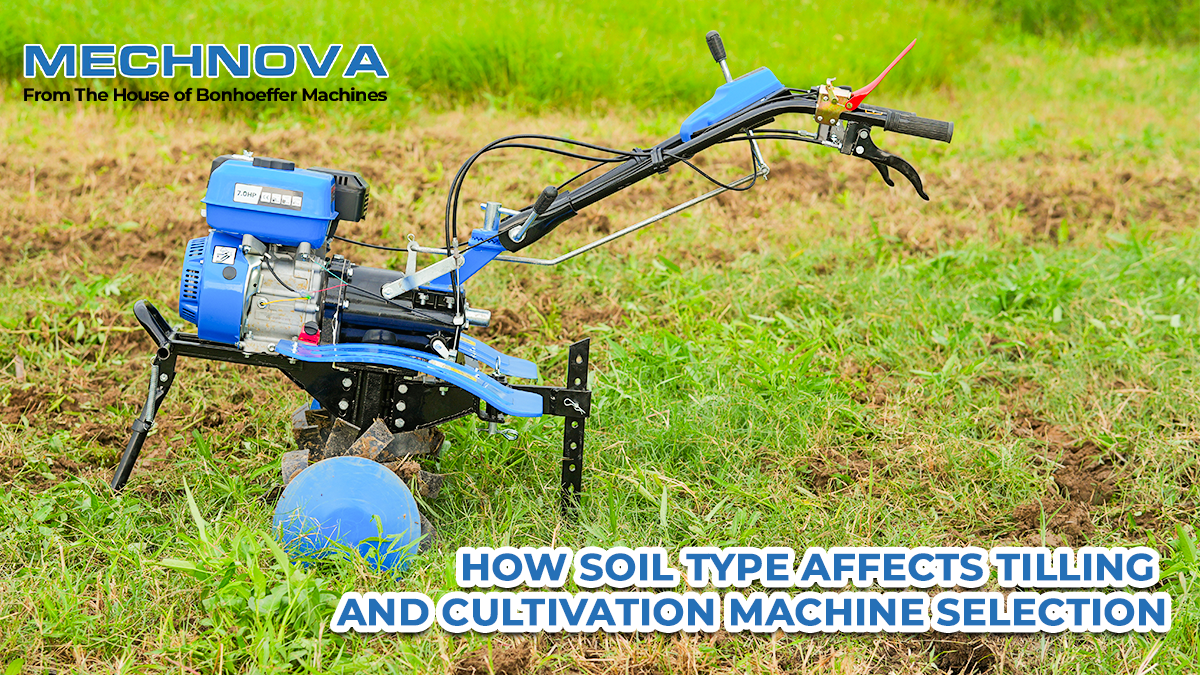
When choosing a cultivator or tilling machine, the hardness of the soil, its moisture content, field area, and the necessary work depth need to be taken into consideration. In the case of soil that is somewhat soft and prepared in advance, a light cultivator or power weeder may be adequate for inter-row cultivating and normal soil treatment. In the case of soils that are harder or more compacted, an agricultural machine with increased engine power, solid transmission, and robust blades would perform better.
Importance of Working Depth and Width
The depth of work is another critical consideration. Light tillage will do the job for some crops and field operations, but deep tillage might be needed for breaking up hardpan and land preparation before planting. In addition, the width of work must also depend on the size of the field and crop spacing. The larger the machine, the wider it will work, and vice versa.
Consider Soil Moisture
The soil moisture content can also have an effect on the performance of the equipment. It will cause more sticking and increased resistance when working on clayey or heavy soils that are too wet, while very dry compacted soil might need more power to be used.
Conclusion
The understanding of soil properties prior to choosing agricultural machinery will aid farmers in choosing agricultural machinery that is suitable for their field conditions. With regard to soil texture, hardness, moisture, depth of tillage, machine power, and field size, it will be helpful in achieving successful tillage and cultivation activities.
Read More: Water Pump Maintenance: Essential Tips for Agricultural Use
