
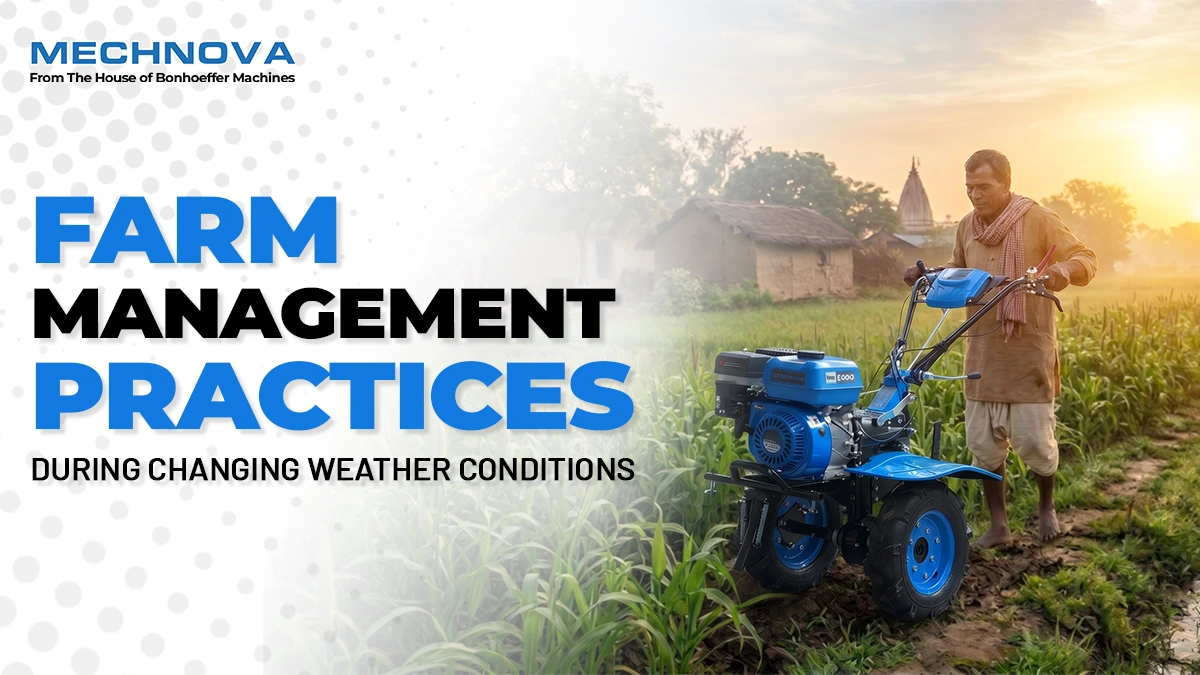
Changes in the weather might bring some problems to the farmer at any stage during the growth of the agriculture process. Some of the problems that might occur are inconsistent rainfall, warm weather, cold fronts, and changes in weather patterns. Good farm management practices enable farmers to take care of their crops despite the weather changes.
Key Farm Management Practices
- Monitor Weather Forecasts Regularly
A weather forecast is of great importance in helping the farmer conduct the farming processes more effectively. They will have ample time to plan for any changes in the weather such as rains, storms, or even heat waves.
- Maintain Proper Soil Health
Good soil is important for proper crop growth as well as to make the crops adaptable to changing weather patterns. Organic manure and compost can be used to enhance soil fertility and structure. Good soil will be achieved through land preparation.
- Manage Irrigation Efficiently
The variations in temperature and the rains will affect the amount of water in the soil. Irrigation activities must be carried out depending on the crop requirements. Drip irrigation is one of the many ways of conserving water.
- Protect Crops from Extreme Weather
Crops may be damaged by strong winds, heavy rainfall, frost, and high temperature. Mulching, draining, use of shade nets, and covers may be used whenever there is need for them. Another way is choosing suitable crop varieties depending on the climatic conditions prevailing at that time.
- Use Agricultural Machinery Effectively
It becomes mandatory that a farmer must perform agricultural activities on time in case the weather is uncertain. By using farm machinery such as power weeders, cultivators, and sprayers, the farmers will be able to perform agricultural activities.
- Follow Regular Pest and Disease Management
The temperature and moisture changes can influence the risk of infestation and disease on the crops. It is crucial that farmers check on their farms often and take all necessary measures. If they use the right ways of crop protection, their health will be maintained.
Conclusion
Managing agriculture under varying weather conditions requires proper planning, control and scheduling of agricultural activities. With the help of efficient soil management, water management, crop protection, and proper equipment at the farm, farmers will be able to practice their activities efficiently under varying weather conditions.
Read More: What Is an Air-Cooled Engine and Why Is It Used in Farm Equipment?
