
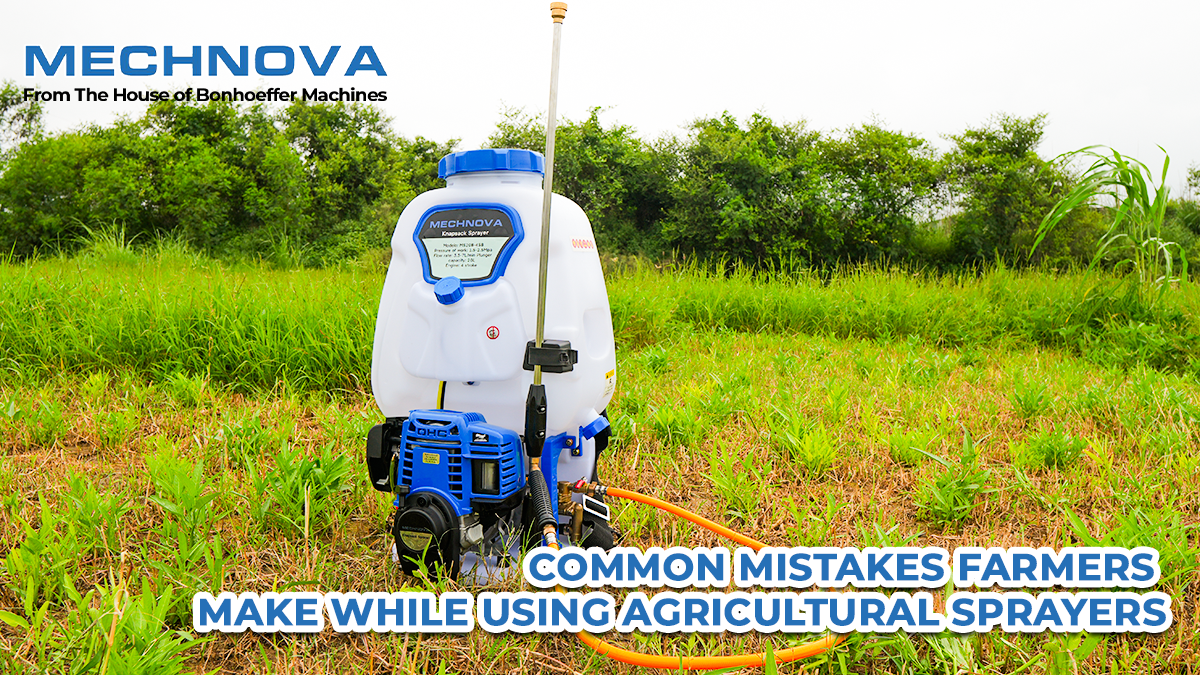
Agricultural sprayers are useful for applying pesticides, herbicides, fungicides, and fertilizers on crops. These sprayers when used properly help the farmer in ensuring even distribution and avoiding wastage of the materials. There are however some errors in spraying that may affect the crop quality, effectiveness of the spray, and the safety of the operator.
Common Spraying Mistakes to Avoid
- Use of Wrong Nozzle
The wrong choice of nozzle may lead to improper distribution of the spray or usage of too much chemical. The nozzle should be selected depending on the application purpose.
- Incorrect Chemical Mixing
Too many or too few chemicals could affect the effectiveness of the solution to be used. Make sure that you always observe the proper amount stated on the label.
- Ignoring Sprayer Calibration
The use of an uncalibrated agricultural sprayer may cause uneven application. Calibration ensures that the right amount of the liquid is evenly applied.
- Application During Windy Conditions
The spray may not be evenly applied on the target due to the wind carrying the droplets away from it. The process of spraying needs to take place in favorable conditions.
- Spraying Height is Not Correct
When the nozzle is positioned either too high or too low, it may lead to a poor distribution pattern. Keeping it at the correct height will assist in achieving a more even distribution of the spray over the crops.
- Overlapping Spray Passes
Overlapping while maneuvering in the field may lead to excessive application of chemicals on some spots. Farmers need to ensure proper spacing between spraying runs.
- Ignoring Personal Safety
The absence of proper safety gear when dealing with farm chemicals can make one vulnerable to dangerous chemicals. It is recommended that farmers wear suitable safety clothes, gloves, masks, and eye protection among other safety gear.
- Spraying Without Considering Crop Conditions
The growth stage of crops, weather, and field conditions may affect the efficiency of the application process. Farmers must take these into account before applying chemicals.
Conclusion
By avoiding such common pitfalls, one will be able to have an efficient spray application process that reduces wastage and improves crop management. Calibration of the equipment, its maintenance, proper handling of chemicals, and responsible spraying techniques may all contribute to achieving success through agricultural sprayers.
Read More: How Soil Type Affects Tilling and Cultivation Machine Selection
