
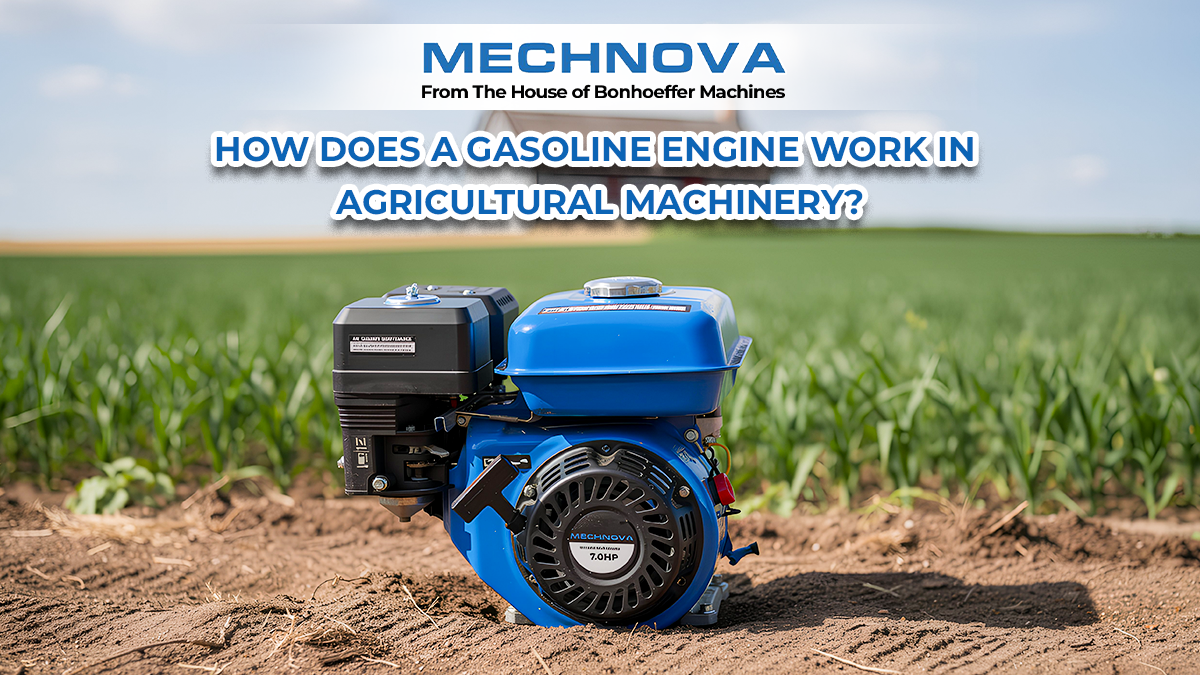
Gasoline engines are used in agricultural machinery since they offer efficient power that is useful in performing a variety of farming activities. Whether it is a power weeder, water pump, brush cutter or sprayer, these engines will be useful in facilitating the completion of these farming tasks. It is also important to understand how a gasoline engine works.
What Is a Gasoline Engine?
Gasoline engine refers to an internal combustion engine whereby gasoline serves as the source of fuel for producing mechanical energy. In the process, air and fuel are combined within the engine cylinder and then ignited by a spark, creating pressure which moves the piston.
How Does a Gasoline Engine Work?
- Intake Stroke
The piston moves down and the intake valve opens allowing air and fuel to move into the cylinder thus forming the mixture required for the combustion process.
- Compression Stroke
The piston moves upwards and compresses the mixture making it ready for ignition. Compression of the mixture makes it easier to have combustion by creating the required pressure.
- Power Stroke
There is an ignition of the compressed mixture through a spark plug and the resulting combustion drives the piston downwards producing power which is transferred through the connecting rod to produce engine power.
- Exhaust Stroke
The piston moves up as the exhaust valve opens and releases the burned mixture from the cylinder in preparation for the next stroke.
Benefits of Gasoline Engines in Agricultural Machinery
- Ease of Operation
The gasoline engine is engineered in such a way that it facilitates easy starting and working and therefore can be employed in the agricultural machinery that is required in various farming practices.
- Favorable Power to Weight Ratio
Gasoline engines have the capacity to offer efficient power but they are light-weight and small at the same time. Thus, they can be employed in portable agricultural machinery like brush cutters, sprayer, and power weeders.
- Suitable for Agricultural Machinery
Gasoline engines are useful in powering various agricultural machinery. They are employed in agricultural machinery like that used in cultivation, irrigation, vegetation control, spraying, among others.
- Convenient for Areas Without Electricity
Gasoline machines do not require an electric connection to work. This makes them useful in outdoor farming practices and where electricity is not readily available.
Role of Gasoline Engines in Agricultural Machinery
The gasoline engines are used in several kinds of agricultural machinery. These engines can provide energy for the use of power weeders to cultivate soil and eliminate weeds, irrigation water pumps, brush cutters to control plant growth, and sprayers for use of agricultural liquids. The small size and mobility of the engines suit this type of machinery.
Conclusion
The gasoline engine is able to utilize the energy contained in fuel by means of a four-cycle process of combustion, thus producing mechanical energy. The usefulness of power, simplicity of use and versatility make the gasoline engine one of the most effective sources of power for different kinds of agricultural machinery.
Read More: Grass Cutting Machine vs Manual Grass Cutter: Which Is Better?
