
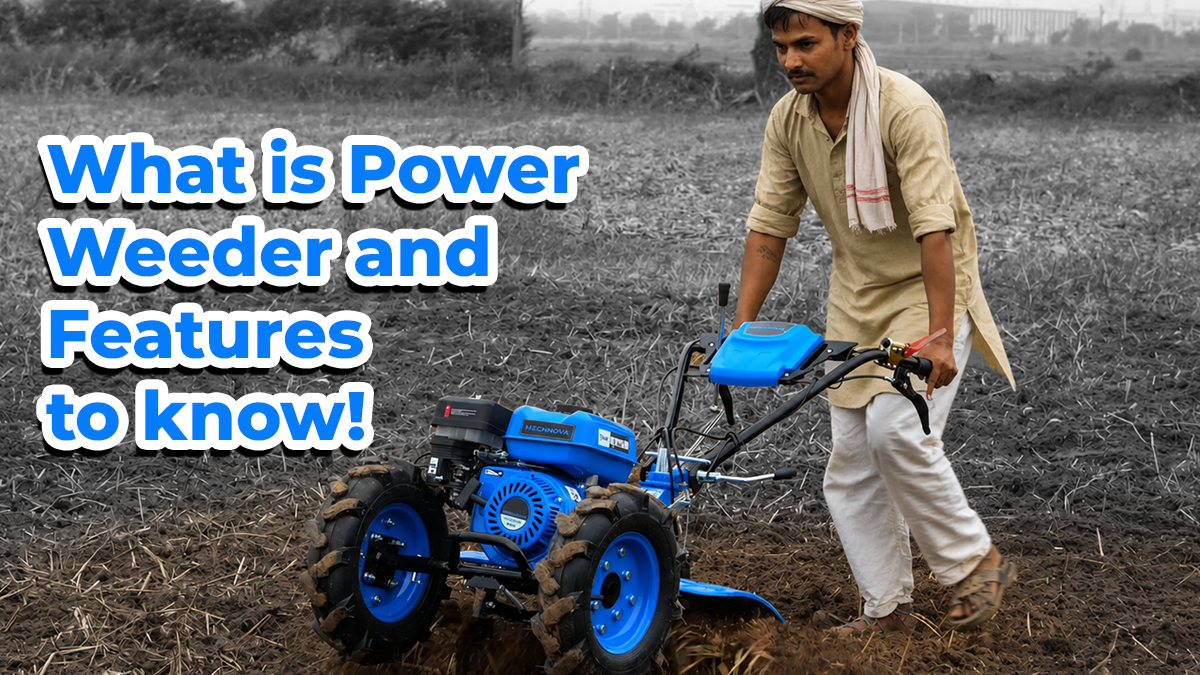
Agriculture has evolved significantly in recent years, largely driven by advanced equipment that simplifies daily field operations. One such innovative farming equipment is the Power Weeder. A great harvest doesn’t just happen, it takes getting ahead of the weeding before things get out of hand.If weeds are not controlled in time, they begin competing with crops for vital resources like sunlight, nutrients, water, and growing space. Delaying weed removal can cause serious consequences, actively cutting into your crop yields and degrading the quality of your harvest.
Traditionally ,farmers believed in manual labour to remove weeds, which is time intensive as well as labor intensive. Fortunately, the advent of power weeders has made weed management much easier. These machines speed up the job, make it easier and far less labor intensive than traditional methods. But their benefits extend far beyond weed control. They also loosen the soil as they walk across the field, improving the air flow and creating better conditions for growth, helping crops to develop stronger roots and thrive throughout the season.
In this blog, we will explore what a power weeder is? How does it work? key features, benefits & why it is an important machine in modern agriculture.
What is a Power Weeder?
A power weeder is a compact, motorized tool designed to eliminate the time and physical strain of manual weeding. Unlike manual weeding, which drains your time and your energy, a power weeder automates the process, allowing farmers to cover larger areas in less time.
This compact machine uses a petrol or diesel engine, which digs into the soil to tear out weeds and give the soil some breathing room. Besides weed removal, power weeders are also used for soil aeration, intercultural operations, and seedbed preparation.
Today, power weeders are widely used in crops such as:
- Vegetables
- Sugarcane
- Cotton
- Maize
- Groundnut
- Turmeric
- Orchards
- Tea and coffee
How Does a Power Weeder Work?
A power weeder uses a small but powerful engine attached to rotary blades or tines. The operator drives the machine down crop rows and the spinning blades chop and uproot weeds and break up compact soil.
The machine is designed to operate between crop rows without damaging the plants. Many models also feature adjustable tilling widths and depths, which makes them usable for different crops and soil conditions.
The ergonomic handle and easy-to-use controls make it user-friendly for even first-time users with little training.
Key Features of a Power Weeder
1. Powerful Engine
Power weeders are available with petrol or diesel engines ranging from 3 HP to over 10 HP. Higher horsepower models are suitable for larger farms and tougher soil conditions, while compact models work well for small farms and gardens.
2. Durable Rotary Blades
The machine comes equipped with durable steel rotary blades or tines that effectively remove weeds while cultivating the soil. These blades are designed for long-lasting performance even under demanding agricultural conditions.
3. Adjustable Working Width
Most modern power weeders allow users to adjust the tilling width according to crop spacing. This flexibility makes the machine suitable for different farming applications.
4. Adjustable Tilling Depth
Farmers can modify the depth of cultivation depending on the soil type and crop requirements. This ensures effective weed removal without disturbing plant roots.
5. Compact Design
Unlike large tractors, power weeders are lightweight and compact, making them ideal for narrow crop rows, orchards, and uneven terrain where larger equipment cannot operate efficiently.
6. Easy Maneuverability
Modern power weeders feature ergonomic handlebars, easy steering, and user-friendly controls that reduce operator fatigue during long working hours.
7. Fuel Efficiency
Most power weeders consume relatively less fuel while delivering excellent field performance, making them an economical choice for farmers.
8. Multi-Purpose Attachments
Several models support interchangeable attachments, enabling farmers to perform multiple tasks such as:
- Soil cultivation
- Ridging
- Furrow making
- Earthing up
- Ploughing
- Seedbed preparation
This versatility increases the overall value of the machine.
Benefits of Using a Power Weeder
Farmers worldwide are increasingly adopting power weeders because of their numerous advantages.
- Saves Time
Compared to manual weeding, a power weeder completes the task much faster, allowing farmers to cover larger fields in less time.
- Reduces Labor Costs
With rising labor shortages and increasing wages, power weeders significantly reduce dependency on manual labor.
- Improves Soil Health
The machine loosens compact soil, improving aeration, water infiltration, and nutrient availability.
- Increases Crop Yield
Removing weeds efficiently allows crops to receive adequate nutrients and sunlight, leading to healthier plants and higher yields.
- Easy to Operate
Modern power weeders are designed with user-friendly controls, making them suitable even for first-time users after basic training.
- Cost-Effective Investment
Although purchasing a power weeder involves an initial investment, the savings in labor, time, and improved productivity provide excellent long-term returns.
Applications of Power Weeders
Power weeders are suitable for various agricultural activities beyond weed removal.
These include:
- Vegetable cultivation
- Fruit orchards
- Tea and coffee plantations
- Sugarcane farming
- Cotton cultivation
- Flower farming
- Paddy fields
- Horticulture
- Nursery management
- Organic farming
Their versatility makes them suitable for both commercial farms and small agricultural holdings.
Tips for Choosing the Right Power Weeder
Before purchasing a power weeder, consider the following factors:
- Engine power suitable for your land size
- Fuel type (diesel or petrol)
- Working width and depth
- Number of gears
- Availability of spare parts
- Service network
- Attachment compatibility
- Brand reputation
- Warranty
- Budget
Maintenance Tips
Proper maintenance extends the lifespan of your power weeder.
Follow these simple practices:
1. Clear the Blades (After Every Use)
Make it a habit to scrap off wrapped weeds and caked mud. Allowing dirt, grass, and debris to remain on blades can lead to rust over time and affect the machines’s efficiency, causing it to operate less smoothly during next use.
2. Keep the Oil Fresh
Check the dipstick daily. Swap out the oil after the first 10 hours on a new machine, then every 50 hours after that to keep the engine running cool.
3. Tap Out the Air Filter
Working in dusty fields suffocates the air filter fast. Every few uses, tap the dust out of the filter (or rinse it if it’s foam) so the engine doesn’t choke, lose power, or waste fuel.
4. Check the Blades and Bolts
Because the machine vibrates heavily, bolts can wiggle loose. Every few weeks, do a quick walk-around with a wrench to tighten everything up, and check that the blades aren’t dull or bent.
CONCLUSION
Weeding is easily one of the most exhausting chores on the farm, but a power weeder changes the game. By taking the hard labor out of weed control and fluffing up the soil at the same time, this machine saves you time, cuts down on hired labor, and boosts your yields.
No matter the size of your plot, picking the right model and keeping up with basic maintenance means you’ll have a reliable workhorse for years. Ultimately, investing in a power weeder isn’t just about clearing dirt it’s about making your daily farming smarter, faster, and a lot easier on your back.
Read More: How to Compare Tiller Models, Features, and Costs Before Buying
